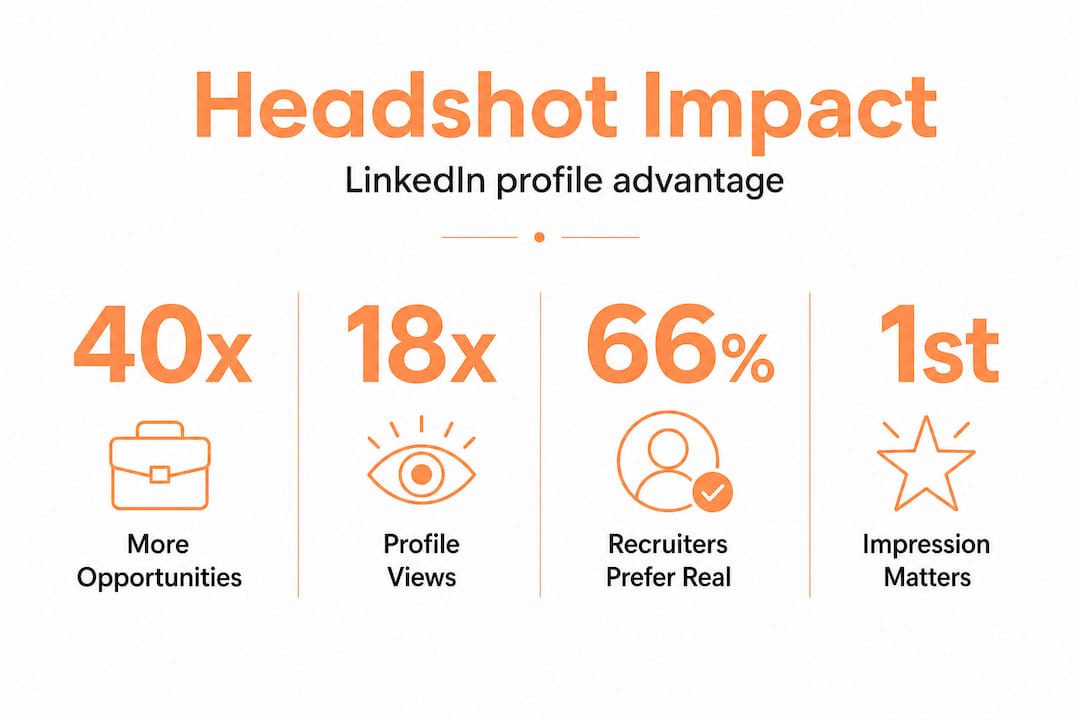
Your LinkedIn profile photo is doing more work than you probably realise. It’s not just a picture sitting in the corner of your profile, it’s the very first thing a recruiter, potential client, or new connection notices before they read a single word you’ve written. And the data backs this up. All-Star profiles are 40x more likely to receive opportunities than those without a photo. That’s not a small margin. So if you’ve been putting off sorting your headshot, or wondering whether it really matters, this is the article that will change your mind.
Table of Contents
- How LinkedIn headshots affect your opportunities
- The psychology of first impressions on LinkedIn
- Real photos vs AI-generated headshots: What recruiters really think
- When headshot style matters (and when it doesn’t)
- Best practices: Maximising your LinkedIn headshot for success
- The overlooked truth: Why headshots are more than just a picture
- Ready to transform your LinkedIn presence?
- Frequently asked questions
Key Takeaways
| Point | Details |
|---|---|
| Boost profile visibility | A professional headshot dramatically increases your chances of being found and contacted on LinkedIn. |
| Trust and engagement | A quality photo prompts quick trust and deeper engagement with your profile. |
| Authenticity is key | Recruiters overwhelmingly prefer genuine professional images over AI-generated fakes. |
| Tailor to your sector | Choose your headshot style based on industry norms, from corporate to creative. |
| Update after milestones | Refresh your photo after role changes, promotions, or shifts in your personal brand. |
How LinkedIn headshots affect your opportunities
Let’s be honest, most people know a headshot helps. But the actual scale of the difference is something that surprises almost everyone when they see it spelled out. LinkedIn profiles with photos are viewed far more often, trusted more quickly, and favoured by the platform’s own algorithm.
Here’s a quick look at the difference:
| Profile type | Likelihood of appearing in searches | Likelihood of receiving opportunities |
|---|---|---|
| Profile with professional headshot | 18x higher | 40x higher |
| Profile with casual or low-quality photo | Moderate | Low |
| Profile with no photo | Very low | Very low |
That is a genuinely enormous gap. And it’s not just about how humans perceive you. LinkedIn’s own algorithm prioritises All-Star profiles, which require a profile photo as one of the core criteria. So without a strong headshot, you are essentially invisible to the platform’s matching and recommendation engine.
There’s also the conversion factor to consider. Images increase conversion across every digital touchpoint, and LinkedIn is no different. When people land on your profile, they make a snap decision in under a second about whether to engage. A strong photo keeps them there. A weak one, or no photo at all, and they move on without a second thought.
The good news? A high-quality headshot is one of the most controllable parts of your professional brand. You can’t always control your job title or the number of endorsements you’ve received. But you can absolutely control how you present yourself visually. And if you want to boost your image and credibility on LinkedIn, starting with a proper headshot is the most direct route.
“Your headshot is your handshake. People decide within a fraction of a second whether they want to know more about you.”
Key reasons why your headshot directly affects outcomes:
- Algorithmic visibility: LinkedIn rewards complete profiles with a photo.
- Click-through rate: Profile photos increase the number of people who click through to read your full profile.
- Message response rate: Profiles with professional photos receive significantly more responses to connection requests and messages.
- Recruiter trust: Recruiters actively filter out profiles without photos as a matter of efficiency.
The psychology of first impressions on LinkedIn
So why does a photo have such a powerful effect? The answer is rooted in how our brains process faces. We are wired to make trust judgements about a person’s face in under one second. That’s not a choice, it’s a deeply ingrained human behaviour.
“Trust is established in less than a second.”
On LinkedIn, that means your headshot is working hard before a recruiter has even read your job title. Composition, lighting, and expression all feed into that instant assessment. Research shows that optimal composition means your face should fill roughly 60% of the frame, you should be smiling naturally, and the lighting should be flattering and even. These are not arbitrary style preferences. They are rooted in the psychology of how we perceive warmth, competence, and trustworthiness.
Here’s how common headshot mistakes actually land with recruiters:
| Headshot issue | Recruiter perception |
|---|---|
| Dark or harsh lighting | Unprofessional, low effort |
| Distant or small face in frame | Hard to connect with, forgettable |
| Group photo or cropped event photo | Careless, disorganised |
| Overly formal or stiff expression | Unapproachable, cold |
| Genuine, relaxed smile | Warm, competent, trustworthy |
| Clear background, sharp focus | Polished, professional |
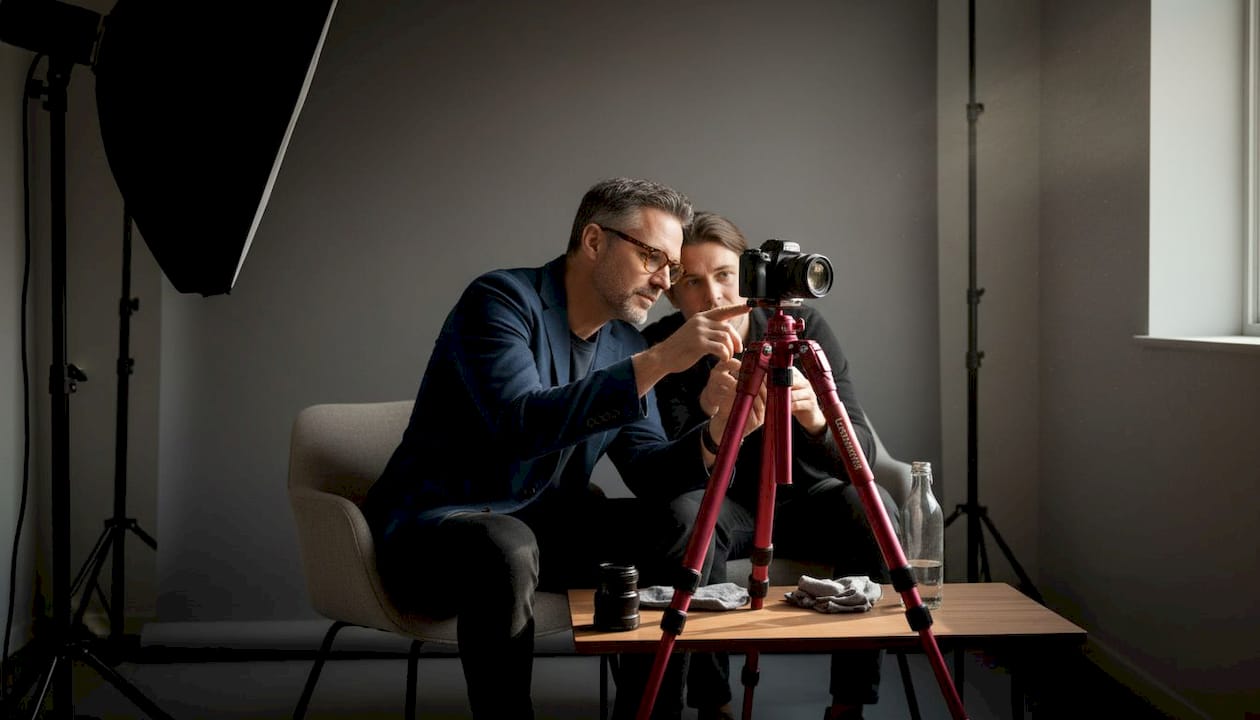
Small adjustments can make a real difference here. Something as simple as turning slightly towards the light, relaxing your shoulders, and smiling with your eyes rather than just your mouth can transform how approachable you appear. That’s why a good photographer isn’t just pointing a camera at you, they’re drawing out a version of you that reads well on screen.
Pro Tip: Before your shoot, have a look at your London LinkedIn headshots examples from professionals in your industry. Notice what makes some photos feel warm and credible and what makes others feel flat or stiff. Use that as a reference.
It’s also worth thinking about what your profile photo says about your personal brand. On LinkedIn, your photo isn’t just a face, it’s the cover of the story you’re telling about your career.
Real photos vs AI-generated headshots: What recruiters really think
AI-generated headshots have become a hot topic, and honestly, we understand the appeal. They’re quick, cheap, and in some cases, they look surprisingly polished. But there’s a significant problem with them that most people aren’t thinking about clearly.
66% of recruiters are put off by AI-generated headshots when they detect one. And they’re getting better at detecting them. The uncanny valley effect, slightly odd skin texture, eyes that don’t quite look real, or expressions that feel just a touch off — recruiters who look at hundreds of profiles every week start to notice these things.
Here’s how most recruiters actually assess a headshot:
- Glance test: Does the photo look real and professional at first glance?
- Detail check: Is the skin texture natural? Are the eyes believable? Does the background look authentic?
- Consistency check: Does the photo match the written tone and experience level on the profile?
- Gut feeling: Does this person feel trustworthy based on what I see?
If your photo fails at any of these stages, it introduces doubt. And in a competitive job market, doubt is the last thing you want a recruiter feeling about you. London professionals should prioritise authentic shoots over AI-generated alternatives, particularly to avoid the reputational risk of being detected.
Pro Tip: If you’re genuinely weighing up cost as a factor, consider this. A professional headshot session is a one-off investment that pays dividends every time someone views your profile. An AI photo might save you money upfront, but if it puts off even one potential employer or client, the cost was never worth it. Work with the best London photographer you can access and treat it as a career investment, not a personal expense.
When headshot style matters (and when it doesn’t)
Not every industry expects the same thing from a LinkedIn headshot. And this is where a lot of professionals get confused or overthink things. The short answer is that the fundamentals, good lighting, clear face, natural expression, apply everywhere. But the style, attire, and setting can shift depending on your field.
Here’s a breakdown of what tends to work across different sectors:
- Finance and law: Classic studio headshot, formal attire, plain or neutral background. Recruiters in these sectors often view anything less polished as a signal of low attention to detail.
- Tech and engineering: Quality still matters, but headshot quality may matter less in tech fields as long as the image is clear and not obviously amateur. Smart casual works well.
- Creative industries: More flexibility here. A slightly relaxed pose, an interesting background, or a more expressive style can actually signal creativity and personality, which is exactly what creative employers want to see.
- Start-ups and scale-ups: Authenticity is prized. A photo that feels real and approachable often lands better than something overly corporate.
“The right style for your headshot is the one that matches the professional world you’re trying to enter or impress.”
That said, even in sectors that allow for creative portrait styles, the quality of the photograph still matters. Some recruiters will dismiss a non-studio-quality image outright, regardless of the field. And in the creative world, a poorly lit selfie doesn’t signal “creative,” it signals “I didn’t make an effort.” There’s also something to be said for how a strong visual identity across your branding for photographers and professionals alike creates a consistent, memorable impression.
The nuances around LinkedIn headshot style are worth reading up on, particularly if you’re in a field where expectations aren’t immediately obvious.
Best practices: Maximising your LinkedIn headshot for success
Knowing the theory is one thing. Knowing what to actually do next is another. Here are the most important steps you can take right now to make your LinkedIn headshot work harder for you.
- Choose a recent photo. If your headshot is more than two or three years old, or if your appearance has changed significantly, it’s time for a new one.
- Make sure your face fills the frame. Aim for that 60% face-to-frame ratio. You want people to be able to clearly see your expression on a small screen.
- Use natural or studio lighting. Harsh overhead light, strong shadows, or grainy indoor lighting all reduce quality instantly. Even a bright outdoor setting can work well.
- Smile genuinely. Not a forced grin. A warm, natural expression that reflects how you’d actually like to come across to a colleague or client.
- Check your background. Plain, uncluttered backgrounds keep the focus on you. Busy environments can distract from your face.
- Dress for the role you want. Think about how you’d present yourself at an important meeting or interview in your sector, and dress to that standard.
After key career milestones, updating your photo is not optional, it’s smart strategy. Updating post-promotion for branding alignment is one of the most effective ways to signal professional growth and keep your profile feeling current.
Pro Tip: If you’ve recently changed roles, launched a new business, or repositioned your career in any way, booking a headshot session before the spring rush is a smart move. Demand peaks seasonally and the earlier you lock in a session, the better your options for timing and preparation.
The overlooked truth: Why headshots are more than just a picture
Here’s something we’ve seen time and again working with professionals across London. People come in thinking they’re just getting a photo. They leave realising they’ve done something quite a bit more significant.
A great headshot doesn’t just perform well on LinkedIn. It becomes part of how people recognise and remember you across your entire professional life. It shows up in email signatures, on company websites, in speaker bios, on press mentions, and in the minds of people who met you briefly at a networking event and then searched for you afterwards. The photo is often what confirms “yes, that’s the person I was looking for.”
We also see a lot of professionals who genuinely believe their industry doesn’t care about headshots. And honestly, that belief costs people opportunities they don’t even know they’ve missed. You never see the recruitment shortlist you didn’t make it onto. You never know which potential client clicked away because your photo felt off. The absence of evidence isn’t evidence of absence.
Authenticity and periodic updates will always outperform chasing trends or cutting corners with AI. Your real face, well-lit, naturally expressed, and professionally captured, is the most powerful personal branding tool you have. And building professional credibility through consistent, high-quality visuals is a long game that pays off in ways that are genuinely hard to quantify but very easy to feel.
Ready to transform your LinkedIn presence?
If this article has got you thinking seriously about your headshot, that’s exactly the right response. A strong photo is one of the easiest wins available to any London professional looking to stand out. At LemonSharkStudio, we specialise in bespoke London LinkedIn headshot sessions tailored to your industry, your personality, and the brand you’re building.
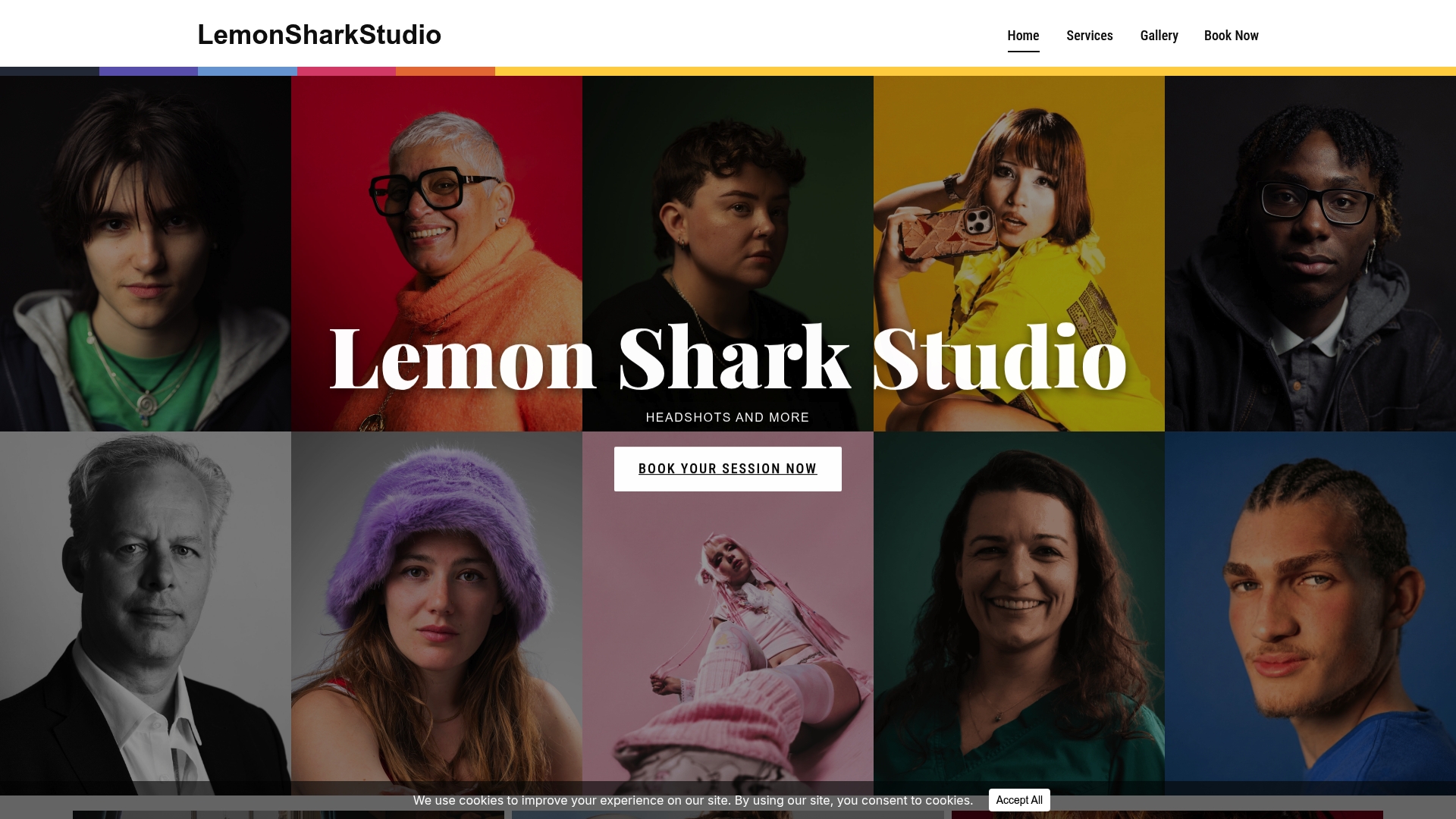
Whether you’re a corporate professional wanting to boost your image and credibility, a creative looking for something with a bit more personality, or someone who’s simply never had a proper headshot taken, we’d love to help. Have a look at our gorgeous studio photos and see what’s possible. Booking is easy and we’ll guide you through every step so you feel comfortable and confident in front of the camera.
Frequently asked questions
Does having a LinkedIn headshot affect job search outcomes?
Yes, absolutely. LinkedIn profiles with headshots are 40 times more likely to attract opportunities and 18 times more likely to appear in search results than profiles without one.
Should I use an AI-generated photo for my LinkedIn headshot?
No, we’d advise against it. 66% of recruiters are put off by AI-generated headshots if they detect one, and detection rates are rising as the technology becomes more familiar.
How often should I update my LinkedIn headshot?
Update your headshot whenever your appearance or role changes significantly. Updating after a promotion is particularly important for keeping your personal brand consistent and current.
Does the industry affect what LinkedIn headshot is best?
Yes, it does. Traditional sectors like finance and law expect classic, polished studio headshots, while creative and tech sectors may allow for a more relaxed style, though quality always matters regardless of field.